End cyber poverty among Canada’s farmers and food producers
Food production now depends on connected barns, processing lines and supply chains. Most of it runs without anyone watching for attacks. We set ourselves the task of changing that: services, courses, guidance and exercises for the whole sector.
The services we offer
For producers, processors, boards and associations. Every engagement is scoped to your operation.
01
Security monitoring
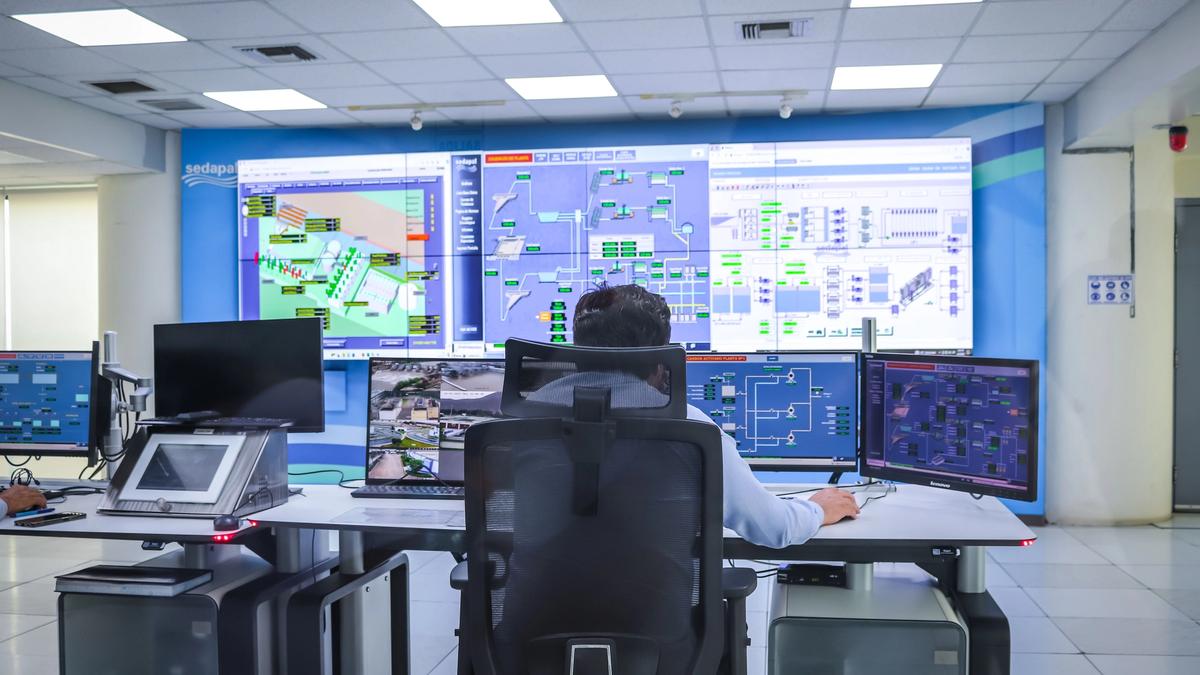
Continuous watch over your connected equipment and networks, with alerts you can act on.
A 60 to 90 minute session for boards, co-operatives, marketing boards and associations on the cyber risks facing your members and what good oversight looks like.
Ongoing · for farms, processors and research stations
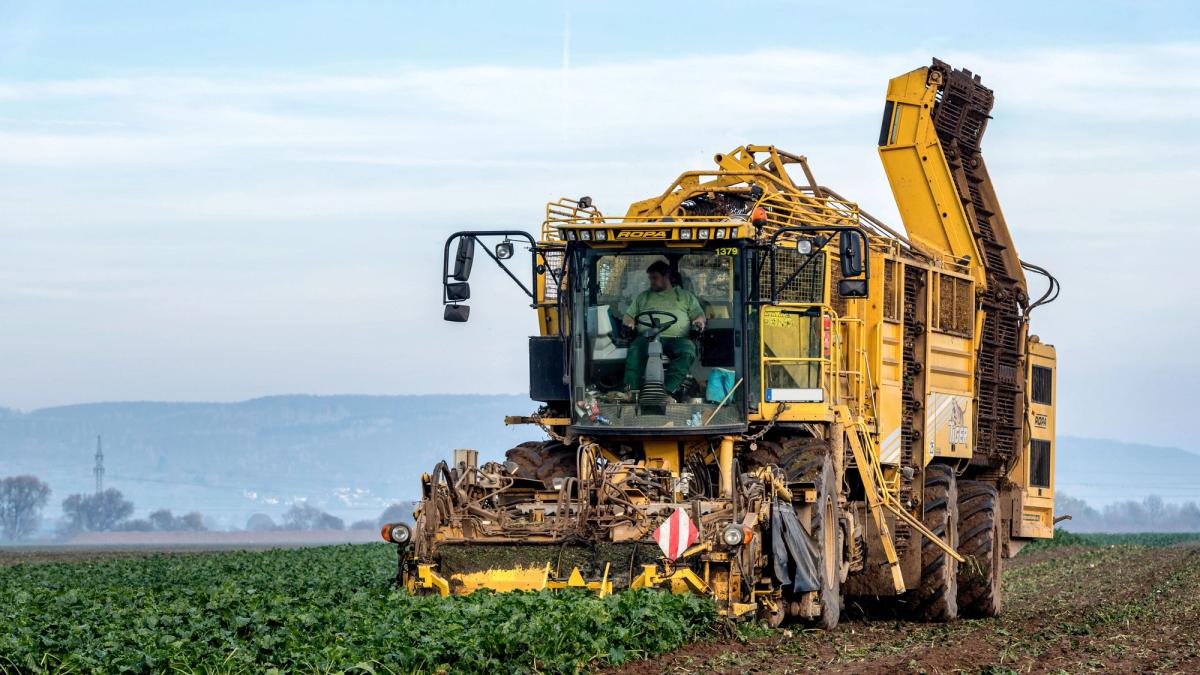
Most agri-food operations have no one watching their networks. Milking robots, climate controllers, feed systems and processing-line controllers sit on the same network as office computers and are reachable from the internet, often with factory passwords. We place sensors on your network, watch the traffic around the clock, and tell you in plain language when something needs attention and what to do about it. You see a monthly summary; you hear from us immediately when it matters. Nothing is installed on your equipment and production is never interrupted.
We walk your operation, physically and on the network, and list every way in. That covers barn and line controllers, cameras, remote-access tools your suppliers left behind, wireless links, shared passwords and the laptops that connect to all of it. You receive a written report that ranks the findings by how likely they are to be used against you and how much damage they would do, followed by a short list of fixes in the order you should make them, with costs where there are any. Most of the first fixes cost nothing.
A second opinion from people who do not sell equipment. Whether you are choosing a herd-management platform, signing a contract with an integrator, answering an insurer’s cybersecurity questionnaire, or deciding what to do after a suspicious email, we give you a direct answer and the reasoning behind it. Many producers use a few hours a year; co-operatives and processors keep us on retainer so there is always someone to call.
Directors of co-operatives, marketing boards, commodity groups and processing companies are now asked about cyber risk by insurers, lenders and regulators, and most have never had the subject explained to them without a sales pitch attached. We give a briefing built for your board: what has actually happened to operations like yours, where the money and the food are at risk, what questions a director should be asking management, and what good oversight looks like at your size. Delivered under Chatham House rules, with a one-page summary the board can keep.
Half day or full day · for your team or your members
A tabletop exercise is a rehearsal. We write a realistic incident for your sector, such as ransomware in a processing plant during peak season or a manipulated sensor feed on a dairy farm, and your people work through it hour by hour: who decides, who calls whom, what gets shut down, what gets said to customers and the press. Nothing is touched on real systems. You leave with a written debrief, the gaps we observed and the changes we recommend, and a team that has made its first mistakes somewhere safe.
60 to 120 minutes · at the Canada Cyber Foundry or on your site
Seeing an attack is more persuasive than reading about one. Our demonstrations take an audience from farm to processing line and show, on real equipment in our facility, how an attacker gets in, what they can do to animals, product and people, and how the same incident is investigated afterwards. We run them for association members, company staff, students and visiting delegations, and we adapt the scenario to your sector.
Self-paced, supported by the NSERC CREATE SECURE-AGRO training program. Enrolment is arranged through us.
~70 minutes, 3 parts
Cyber Sentinels: Safeguarding Security & Ethics in the Digital Age
An NSERC CREATE SECURE-AGRO training module preparing trainees to address cybersecurity challenges in smart agriculture while upholding ethical standards and inclusive practices.
An NSERC CREATE SECURE-AGRO training course in six modules, spanning equitable market access, inclusive design, threat intelligence, data privacy, sustainability, and crisis resilience across the agri-food sector.
An NSERC CREATE SECURE-AGRO training course in six modules, spanning data equity, capacity building, cyber threat management, IoT and blockchain security, reliable AI, and computational tools for food safety and traceability.
Food and water are critical infrastructure. We treat them that way.
A disruption to feed, water, processing or cold chain is a national resilience problem before it is a farm problem. Our critical-infrastructure research, supported by National Defence and by a Canada Research Chair program, brings threat intelligence, incident response and risk quantification against state-sponsored actors to the agri-food sector, and our briefings and exercises are adapted for defence, emergency-management and critical-infrastructure audiences.
01
Securing Canada’s Critical InfrastructureA Canada Research Chair program advancing cyber threat intelligence for Canada’s critical infrastructure — automated incident response, f…
Cybersecurity for Critical InfrastructuresA collaborative educational and research partnership spanning Norway, Canada, and India, fortifying critical infrastructures against evol…
May 24, 2027 – May 27, 2027 · Toronto Metropolitan University, Toronto, Ontario, Canada
2nd International SECURE-AGRO Workshop
Held with IEEE CCECE 2027. Call for papers on security, reliability, and equity in connected agri-food systems, plus the Innovation Runway student pitch competition.
When an automated system on a farm or a line fails, the same investigation applies
Our AI forensics research gives the sector a way to establish what an automated or AI-driven system did after an incident, for operators, insurers and regulators.