

SECURE-AGRO Fall Institute
Five half-day sessions on the cybersecurity of Canada’s agri-food systems. Invitation only.
Overview
The SECURE-AGRO Fall Institute brings together producers, processors, technology providers, government, and researchers for a focused week on the cybersecurity of Canada’s agri-food systems. This inaugural edition runs from October 19 to 23, 2026.
The Institute is being organized through NSERC CREATE SECURE-AGRO, a national multidisciplinary initiative connecting cybersecurity, computer science, agri-food research, industry, and government expertise. Its purpose is to examine the cybersecurity, operational resilience, reliability, and public-policy challenges facing different parts of Canada’s agri-food ecosystem.
The Institute will consist of five invitation-only, sector-focused half-day sessions. Each day will bring together approximately 30 participants from academia, industry, government, producer organizations, and the cybersecurity community. Discussions will be held under the Chatham House Rule to support candid exchange among participants.
Each day focuses on a different industry within Canada’s agri-food sector.
How to attend
The Fall Institute is open to graduate students, farmers and producers, academics, policy makers, and public officials. Each day is curated to maintain a balance across these groups, so that discussions reflect the full range of perspectives in Canada’s agri-food sector.
Because sessions run under the Chatham House Rule and depend on candid, informed exchange, attendance is limited to participants we are able to verify. In practice, most participants join through an existing connection to the Institute:
- Through a speaker, panellist, or session chair. If you know someone listed in the programme, contact them directly and they can put your name forward.
- Through a sector organization or association. Producer groups, industry associations, and sector representatives at Agriculture and Agri-Food Canada (AAFC) or the Ontario Ministry of Agriculture, Food and Agribusiness (OMAFA) can introduce you to the organizing team.
- Through the NSERC CREATE SECURE-AGRO network. Anyone involved in the SECURE-AGRO programme — faculty, collaborators, partners, or trainees — can support your registration.
If none of these routes are available to you and you believe you should be in the room, write to us at fallinstitute@cybersciencelab.com with a short note about your role and your connection to the sector. We will follow up to confirm details and, where there is a fit, arrange an invitation. Places on each day are limited, and we encourage early contact.
Programme
Click a day to expand its full schedule below.
| Day | Date | Theme | Venue |
|---|---|---|---|
| Day 1 | Monday, October 19, 2026 | Automated Livestock Production: Securing Reliable Dairy and Poultry Operations | Elora Research Station – Dairy Facility |
| Day 2 | Tuesday, October 20, 2026 | Downstream Agri-Food Supply Chains: Building Resilience from Inputs to Retail | Canada Cyber Foundry |
| Day 3 | Wednesday, October 21, 2026 | Precision Agriculture and Controlled Environments: Securing Crops and Greenhouses | Delta Hotels Guelph Conference Centre |
| Day 4 | Thursday, October 22, 2026 | Advanced Livestock Production and Primary Processing: Resilient Beef and Pork Systems | ANNU 141, Animal Biosciences |
| Day 5 | Friday, October 23, 2026 | Agri-Food Cyber Resilience: Government Readiness, National Coordination, and Public Trust | OAC Centennial Arboretum Centre |
Day 1 — Automated Livestock Production: Securing Reliable Dairy and Poultry Operations
Elora Research Station – Dairy Facility, 6182 Second Line East, RR 2, Elora, Ontario N0B 1S0
Dairy and poultry production increasingly depends on connected milking, feeding, ventilation, environmental-control, monitoring, and farm-management systems. This session will examine how cybersecurity failures can affect operational continuity, animal health and welfare, food production, and confidence in agricultural data. Participants will identify practical measures for strengthening the reliability and resilience of increasingly automated livestock operations.
Opening remarks · 09:00–09:30

Greg WoottonAssistant Deputy Minister/Chief Administrative Officer, Research and Corporate Services Division at OMAFRA, with three decades in the Ontario Public Service across environment, economic development, and government services.
Chief Administrative Officer and Assistant Deputy Minister, Ontario Ministry of Agriculture, Food and Agribusiness (OMAFA)
Keynote · 09:30–10:00

Ali DehghantanhaCanada Research Chair in Cybersecurity at the University of Guelph, working on AI forensics — reconstructing what an AI system did and why after something goes wrong. Co-founder and CEO of Avaly.ai, an operating control layer for secure, trustworthy, self-healing AI.
Professor and Tier 2 Canada Research Chair in Cybersecurity and Threat Intelligence; Director, Cyber Science Lab, University of Guelph
Coffee Break · 10:00–10:30
Panel · 10:30–11:45 — Securing Automated Dairy and Poultry Operations: Resilience, Data Integrity, and Safe Innovation
Chair
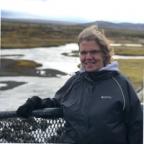
Michelle EdwardsLeads agri-food research data strategy at the University of Guelph, connecting Food from Thought and the Ontario Agri-Food Innovation Alliance to grow Agri-Food Data Canada. Specializes in quantitative genetics, experimental design, and statistical analysis.
Director, Agri-Food Data Strategy, University of Guelph
Members

Tom WrightDairy cattle specialist with the Ontario Ministry of Agriculture, Food and Agribusiness, working with producers, industry and academia on dairy production and management, and an Adjunct Professor in the University of Guelph’s Department of Animal Biosciences.
Dairy Cattle Specialist, Ontario Ministry of Agriculture, Food and Agribusiness (OMAFA)
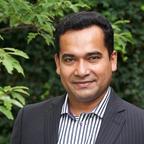
Ataharul ChowdhuryAssociate Professor at the University of Guelph’s School of Environmental Design and Rural Development, researching how knowledge mobilization, digital and participatory media, and technology stewardship can strengthen agri-food communities and combat agri-food misinformation.
Associate Professor, School of Environmental Design and Rural Development, University of Guelph

Jean Howden
Operations Director, Livestock Research Innovation Corporation (LRIC)
This panel will examine the challenges and opportunities associated with securing connected dairy and poultry operations. Panelists will discuss cyber risks affecting automated equipment, remote access, farm-management platforms, technology vendors, and operational data. The conversation will explore how producers, technology providers, government, and researchers can improve system resilience, protect data integrity, maintain animal welfare, and support innovation without imposing unworkable burdens on farm operators.
Closing · 11:45–12:00
Day 2 — Downstream Agri-Food Supply Chains: Building Resilience from Inputs to Retail
Canada Cyber Foundry, 150 Research Lane, Suite 120, Guelph, ON N1G 4T2, Canada
Modern agri-food supply chains depend on interconnected manufacturers, distributors, transportation providers, warehouses, retailers, and digital service providers. Disruption at any point can affect product availability, food quality, traceability, and public confidence. This session will examine cybersecurity and data-sharing risks across downstream supply chains and identify opportunities to improve continuity, visibility, coordination, and resilience.
Opening remarks · 09:00–09:30

Stacey ScottDean of the University of Guelph’s College of Computational, Mathematical, and Physical Sciences (CCMPS), and a professor whose research focuses on human-computer interaction and collaborative and social computing.
Dean, College of Computational, Mathematical, and Physical Sciences (CCMPS), University of Guelph
Keynote · 09:30–10:00

Ben DaviesChief Information Officer at the Vector Institute, overseeing its scientific and business computing environments and advancing Canada’s national AI research infrastructure through the Pan-Canadian AI Strategy.
Chief Information Officer, Vector Institute
Coffee Break · 10:00–10:30
Panel · 10:30–11:45 — Securing the Agri-Food Supply Chain: Third-Party Risk, Trusted Data, and Resilient Logistics
Chair

Karen HandCEO of Precision Strategic Solutions and Director of Canadian Digital Agri-Food (CDAF), focused on digital transformation and precision agri-food data across Canada.
CEO, Precision Strategic Solutions; Director, Canadian Digital Agri-Food (CDAF)
Members

Eric FrankeAutomation Engineering Specialist at the Ontario Ministry of Agriculture, Food and Agribusiness, focused on digital agriculture, automation, cybersecurity, and data-driven decision support.
Automation Engineering Specialist, Ontario Ministry of Agriculture, Food and Agribusiness (OMAFA)

Cathy LennonGeneral manager of the Ontario Federation of Agriculture, Ontario’s largest general farm organization, representing more than 38,000 farm family business members across the province.
General Manager, Ontario Federation of Agriculture

Russel HurstExecutive Director of the Ontario Agri Business Association, representing Ontario’s grain elevators, feed mills, crop input centres and allied businesses.
Executive Director, Ontario Agri Business Association (OABA)
This panel will explore cybersecurity challenges across agricultural input manufacturing, distribution, logistics, warehousing, and retail. Panelists will consider third-party and supplier risk, ransomware, platform dependencies, traceability, data interoperability, and continuity planning. The discussion will identify opportunities for stronger information sharing, common standards, trusted data exchange, coordinated incident response, and investment in supply-chain resilience.
Closing · 11:45–12:00
Day 3 — Precision Agriculture and Controlled Environments: Securing Crops and Greenhouses
Delta Hotels Guelph Conference Centre, 50 Stone Road West, Guelph, ON N1G 0A9
Crop production and controlled-environment agriculture increasingly rely on sensors, autonomous machinery, robotics, irrigation systems, environmental controls, artificial intelligence, and cloud-based platforms. These technologies create significant opportunities for productivity and sustainability, but they also introduce new operational and cybersecurity dependencies. This session will examine how farms and greenhouses can adopt advanced technologies while preserving safety, reliability, data integrity, and operational control.
Opening remarks · 09:00–09:30
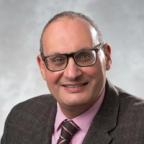
Ibrahim DeiabAssociate Dean of Research and Graduate Studies in the University of Guelph’s College of Engineering and a faculty member in Mechanical Engineering, researching metal cutting and the modelling of machining processes, fixture dynamics, machinability of difficult-to-cut materials, and sustainable, environmentally benign machining.
Associate Dean, Research and Graduate Studies, College of Engineering, University of Guelph
Keynote · 09:30–10:00

Dr. Evan FraserExecutive Director of the Arrell Food Institute and Professor of Geography at the University of Guelph — one of Canada’s most cited scientists working on food systems, climate change, and agricultural sustainability.
Executive Director, Arrell Food Institute, and Professor of Geography, University of Guelph
Coffee Break · 10:00–10:30
Panel · 10:30–11:45 — Securing Precision Agriculture and Greenhouses: Connected Operations, Data Governance, and Safe Automation
Chair

Fattane ZarrinkalamAssociate Professor in the University of Guelph’s College of Engineering and Principal Investigator with the Cyber Science Lab, researching social media mining and semantic technologies — extracting actionable insights from user-generated content across healthcare, telecom, legal tech, and e-commerce.
Associate Professor, College of Engineering, University of Guelph; Principal Investigator, Cyber Science Lab
Members

Fadi Al-DaoudGreenhouse vegetable specialist at the Ontario Ministry of Agriculture, Food and Agribusiness, with over 20 years of research experience in controlled-environment and field crop production.
Greenhouse Vegetable Specialist, Ontario Ministry of Agriculture, Food and Agribusiness (OMAFA)

Marjan AlaviProgram Lead of the Master of Engineering in Systems and Technology (MEST) program at McMaster University’s W. Booth School of Engineering Practice and Technology, researching AI, cyber-physical systems, and intelligent infrastructure.
Program Lead, Master of Engineering in Systems and Technology (MEST) Program, W. Booth School of Engineering Practice and Technology, McMaster University
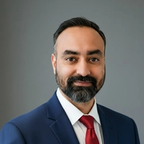
Gurjit RandhawaAssistant Professor in the School of Computer Science at the University of Guelph, whose interdisciplinary research applies AI, computer vision, and robotics to precision agriculture, crop disease detection, and sustainable farming.
Assistant Professor, School of Computer Science, University of Guelph

Guneet KaurAssistant Professor in the School of Engineering at the University of Guelph, researching microbial biosystems engineering, bioreactor processes, and sustainable circular bioeconomy applications.
Assistant Professor, School of Engineering, University of Guelph
This panel will examine the security and resilience of precision-agriculture and controlled-environment technologies. Panelists will discuss risks involving connected sensors, autonomous equipment, environmental controls, remote access, artificial intelligence, legacy systems, and vendor-managed platforms. The discussion will also address agricultural data ownership, integrity, interoperability, and responsible use, while identifying practical pathways toward secure and fail-safe automation.
Closing · 11:45–12:00
Day 4 — Advanced Livestock Production and Primary Processing: Resilient Beef and Pork Systems
Beef and pork production depend on increasingly connected systems spanning farms, barns, feedlots, transportation, traceability platforms, and primary-processing operations. Cyber incidents affecting these systems can disrupt production, compromise animal welfare and worker safety, weaken biosecurity, and interrupt critical supply chains. This session will examine how the sector can improve cybersecurity while ensuring that resilience measures remain practical and accessible to operations of different sizes.
Opening remarks · 09:00–09:30

John CranfieldDean of the Ontario Agricultural College at the University of Guelph, where he began as a student in agricultural economics before returning in 2001 as faculty in FARE and later serving as department chair, associate dean, and interim dean.
Dean, Ontario Agricultural College, University of Guelph
Keynote · 09:30–10:00

Keith WarrinerProfessor in the Department of Food Science at the University of Guelph, specializing in food safety, decontamination technologies, and risk assessment for fresh produce, meat, and eggs. Editor-in-Chief of Food Microbiology.
Professor, Department of Food Science, University of Guelph
Coffee Break · 10:00–10:30
Panel · 10:30–11:45 — Securing Beef and Pork Operations: Continuity, Data Stewardship, and Equitable Resilience
Chair

Jana LevisonProfessor in the University of Guelph's College of Engineering and the inaugural Doody Family Chair for Women in Engineering (2022–2027), researching groundwater quality and quantity impacts from agriculture and climate change.
Professor and Doody Family Chair for Women in Engineering, College of Engineering (Water Resources Engineering and Morwick G360 Groundwater Research Institute), University of Guelph
Members

María G. CorradiniResearches food quality, safety, and processing across the supply chain, developing procedures, protocols, and mathematical models to evaluate how handling practices affect food safety, quality, and nutrition.
Professor and Arrell Chair in Food Quality, Department of Food Science, University of Guelph

Franco NaccaratoExecutive Director of Meat & Poultry Ontario, with fifteen years of progressive management experience across the food industry in marketing, sales, business development, and grant administration.
Executive Director, Meat & Poultry Ontario

Kelly Somerville
CEO, Livestock Research Innovation Corporation (LRIC)
This panel will explore cybersecurity and data-governance challenges across beef and pork production and primary processing. Panelists will consider operational continuity, connected livestock technologies, traceability, biosecurity, remote access, vendor dependencies, and the exchange of data among producers, processors, regulators, and service providers. The discussion will identify resilience measures that are technically effective, economically realistic, and applicable to both large enterprises and smaller operators.
Closing · 11:45–12:00
Day 5 — Agri-Food Cyber Resilience: Government Readiness, National Coordination, and Public Trust
OAC Centennial Arboretum Centre, 250 Arboretum Road, Guelph, ON N1G 2W1
Cybersecurity in the agri-food sector cannot be addressed by individual organizations acting alone. Effective resilience requires coordination among governments, producers, processors, technology providers, researchers, and critical-infrastructure partners. This concluding session will examine national preparedness, institutional responsibilities, incident coordination, information sharing, and the policies required to maintain public confidence in Canada’s food systems.
Opening remarks · 09:00–09:30

Rebecca HallettInterim Associate Vice-President, Research (Agri-Food Partnership) at the University of Guelph, leading the Ontario Agri-Food Innovation Alliance’s work advancing agri-food cybersecurity research through its Special Initiatives program and partnership with Agri-Food Data Canada.
Interim Associate Vice-President Research, Agri-Food Partnership, University of Guelph
Keynote · 09:30–10:00

Nasser AlsukayriAssistant Deputy Minister and CIO at Agriculture and Agri-Food Canada, leading large-scale digital transformation initiatives focused on service design, legacy modernization, and responsible AI adoption.
Assistant Deputy Minister and Chief Information Officer, Agriculture and Agri-Food Canada
Coffee Break · 10:00–10:30
Panel · 10:30–11:45 — Building National Agri-Food Cyber Resilience: Governance, Preparedness, and Public Trust
Chair

Janos BotschnerA social scientist, researcher, and public-sector leader whose work spans organizational resilience and public policy, most recently focused on cybersecurity, disinformation, and other emerging technology-related threats and opportunities.
President/Principal Consultant, HumInsight; CSKA Canada
Members
Michelle EdwardsLeads agri-food research data strategy at the University of Guelph, connecting Food from Thought and the Ontario Agri-Food Innovation Alliance to grow Agri-Food Data Canada. Specializes in quantitative genetics, experimental design, and statistical analysis.
Director, Agri-Food Data Strategy, University of Guelph

Michael von Massow
Professor, Department of Food, Agricultural and Resource Economics, University of Guelph

Kyle WilsonVice President of Information Systems & Digital Innovation at Wellington-Dufferin-Guelph Public Health, with over 15 years teaching at post-secondary institutions across Ontario, focused on health informatics and digital transformation.
Vice President, Information Systems & Digital Innovation, Wellington-Dufferin-Guelph Public Health
This panel will examine how government, industry, academia, and sector organizations can collectively strengthen Canada’s preparedness for significant agri-food cyber incidents. Panelists will discuss roles and responsibilities, threat intelligence, incident reporting, emergency coordination, regulatory and policy gaps, public communication, and mechanisms for trusted information sharing. The panel will identify priorities for national action, investment, research, and cross-sector collaboration.
Closing · 11:45–12:00
Outcome
Each day will contribute to a consolidated Canadian Agri-Food Cybersecurity Risk and Readiness Report, identifying sector-specific risks, cross-sector dependencies, control gaps, policy considerations, and priority actions for government, industry, researchers, and operators.
Organizing Committee
View committee
Institute Co-Chairs
Ali Dehghantanha
Professor and Tier 2 Canada Research Chair in Cybersecurity and Threat Intelligence; Director, Cyber Science Lab, University of Guelph
Fattane Zarrinkalam
Associate Professor, College of Engineering, University of Guelph; Principal Investigator, Cyber Science Lab
Committee Members

Razieh Moradi
PhD Student, Cyber Science Lab, University of Guelph

Zain Ali
PhD Student, Cyber Science Lab, University of Guelph

Suleman Khan
PhD Student, Cyber Science Lab, University of Guelph

Victor Vezina
MSc Student, Cyber Science Lab, University of Guelph

Sumesh Kumar
MSc Student, Cyber Science Lab, University of Guelph

Wilma Vieira
MSc Student, Lang School of Business and Management, University of Guelph

Adam Davis
MSc Student, Cyber Science Lab, University of Guelph

Thomas Rivasseau
PhD Student, School of Information Studies, McGill University